The power of the free offer: ISIS Solar and the democratisation of solar
30th June 2011
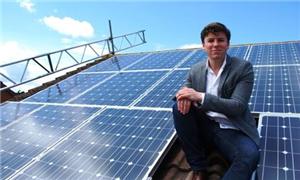
Lawrence Buckley, founder of ISIS Solar, grew up on a self-sufficient organic smallholding and worked with environmentalist-turned-politician Zac Goldsmith at The Ecologist before deciding to set up his own company selling ‘free’ solar to households and businesses across the UK. Louise Bateman talks to him about his first year in business.
Q. You’ve just signed a £2 million deal that will potentially supply ‘free’ green energy to 850 rural businesses in Scotland and England through a cooperative called Borders Marchinery Ring (BMR). How significant is that agreement for ISIS Solar?
A. The deal is quite interesting. We’ve been negotiating it for about two months and by working with BMR we were able to define something that not only made good commercial sense but also worked for their constituents, which are made up of more than 800 Scottish and English farmers.
Q. Is this the first deal of this kind your company has struck?
A. Up until now we have concentrated on our residential portfolio, but BMR is the first of a number of different commercial deals we are going to be announcing over the next few months.
Q. You offer your customers the opportunity to benefit from green energy and savings on their electricity bills by installing and maintaining systems on their roofs and premises free of charge. ISIS Solar makes it money from the Government’s Feed-in Tariff (FiT). How successful has this business model proved to be?
A. When I had a 25-page business plan and went to larger solar players they all said it was a wonderful idea, but they weren’t prepared to back me. The company is a year old now and we are installing 100 panels a day […] It’s a multi-million pound turnover company and profitable.
Q. How did you initially get funding for the company?
A. To set up the company, I went to high net-worth individuals and also received some community funding and family money.
Q. What about funding for the solar deals? How easy has that been to secure?
Q. What is yours?
A. We make [microgeneration] available to people that wouldn’t normally have it. It’s called democratisation. The largest respondents to what we offer are people on fixed income who have retired – atypical early adopters.
Q. Tell me about how the business operates?
A. We have a finance side, a marketing side, customer management side and process side, and a policy and business development side.
Q. What about sales?
A. We don’t have a sales team; we have a customer care team.
Q. How do you market yourself then?
A. We don’t. ISIS Solar was the first company to launch a ‘free’ solar offer in England and Wales and we have a great reputation in the market.
Q. You also do straight sales of solar systems don’t you?
A. Yes, and its an important point to mention that we always say and have always said if you can purchase a system, whether you are residential or business, that you are better off buying, but not everyone has £6,000 or £12,000 to spare.
Q. Has your company been affected by the Government cuts of the solar FiTs and what do you think of the change in Government policy?
A. The fast-track review [into solar FiTs] has not affected ISIS Solar negatively at all. Not in the slightest.
I believe the FiT was designed to support microgeneration for residential and small and medium-sized enterprises to offset some of the rising costs of energy. The alterations to the FiT enabled these two strands to be strengthened. My concern is that the changes could be merely the first salvo of Government action to alter the FiT. And I think that Government needs to protect, and enable, UK homeowners to generate their own electricity.
Q. Do you agree with others that say the Government’s change of policy on the FiT has shaken investor confidence in the low carbon economy?
A. There I think you are right. One of the things about the review is it happened so soon after the new Government took office […] If you alter your policies with such rapidity after they’ve been deployed, future policies may not attract the same level of investment. The Green Deal is a case in point.
Q. You currently provide solar systems through the FiT, but have you any plans to adapt your business model to other areas?
We are currently purely solar but we are looking at the Renewable Heat Incentive and the Green Deal.
Q. What about other technologies?
I see technology as a service so I am technology-agnostic. A service is an air source heat pump or an energy control system through the house. When you start talking about technologies you lose a lot of interest, but we are expanding our technologies around the residential, looking first at heat and energy efficiency.
Q. What do you think the future holds for the UK solar sector?
A. Over the next five years and beyond it’s about moving towards grid parity […] We won’t achieve that without large-scale investment in the industry and if you have short-termism in Government you won’t ever get there.
We need to establish a stable framework and one that companies like ourselves can translate into behavioural aspirations of consumers – be that residential or commercial.
A. The deal is quite interesting. We’ve been negotiating it for about two months and by working with BMR we were able to define something that not only made good commercial sense but also worked for their constituents, which are made up of more than 800 Scottish and English farmers.
Q. Is this the first deal of this kind your company has struck?
A. Up until now we have concentrated on our residential portfolio, but BMR is the first of a number of different commercial deals we are going to be announcing over the next few months.
Q. You offer your customers the opportunity to benefit from green energy and savings on their electricity bills by installing and maintaining systems on their roofs and premises free of charge. ISIS Solar makes it money from the Government’s Feed-in Tariff (FiT). How successful has this business model proved to be?
A. When I had a 25-page business plan and went to larger solar players they all said it was a wonderful idea, but they weren’t prepared to back me. The company is a year old now and we are installing 100 panels a day […] It’s a multi-million pound turnover company and profitable.
Q. How did you initially get funding for the company?
A. To set up the company, I went to high net-worth individuals and also received some community funding and family money.
Q. What about funding for the solar deals? How easy has that been to secure?
A. We work with venture capital parties on an equity basis. But anyone who says funding is easy to secure in this climate is having a different experience to me. Funding is possible to secure, though, if you have a quality proposition.
Q. What is yours?
A. We make [microgeneration] available to people that wouldn’t normally have it. It’s called democratisation. The largest respondents to what we offer are people on fixed income who have retired – atypical early adopters.
Q. Tell me about how the business operates?
A. We have a finance side, a marketing side, customer management side and process side, and a policy and business development side.
Q. What about sales?
A. We don’t have a sales team; we have a customer care team.
Q. How do you market yourself then?
A. We don’t. ISIS Solar was the first company to launch a ‘free’ solar offer in England and Wales and we have a great reputation in the market.
Q. You also do straight sales of solar systems don’t you?
A. Yes, and its an important point to mention that we always say and have always said if you can purchase a system, whether you are residential or business, that you are better off buying, but not everyone has £6,000 or £12,000 to spare.
Q. Has your company been affected by the Government cuts of the solar FiTs and what do you think of the change in Government policy?
A. The fast-track review [into solar FiTs] has not affected ISIS Solar negatively at all. Not in the slightest.
I believe the FiT was designed to support microgeneration for residential and small and medium-sized enterprises to offset some of the rising costs of energy. The alterations to the FiT enabled these two strands to be strengthened. My concern is that the changes could be merely the first salvo of Government action to alter the FiT. And I think that Government needs to protect, and enable, UK homeowners to generate their own electricity.
Q. Do you agree with others that say the Government’s change of policy on the FiT has shaken investor confidence in the low carbon economy?
A. There I think you are right. One of the things about the review is it happened so soon after the new Government took office […] If you alter your policies with such rapidity after they’ve been deployed, future policies may not attract the same level of investment. The Green Deal is a case in point.
Q. You currently provide solar systems through the FiT, but have you any plans to adapt your business model to other areas?
We are currently purely solar but we are looking at the Renewable Heat Incentive and the Green Deal.
Q. What about other technologies?
I see technology as a service so I am technology-agnostic. A service is an air source heat pump or an energy control system through the house. When you start talking about technologies you lose a lot of interest, but we are expanding our technologies around the residential, looking first at heat and energy efficiency.
Q. What do you think the future holds for the UK solar sector?
A. Over the next five years and beyond it’s about moving towards grid parity […] We won’t achieve that without large-scale investment in the industry and if you have short-termism in Government you won’t ever get there.
We need to establish a stable framework and one that companies like ourselves can translate into behavioural aspirations of consumers – be that residential or commercial.
Like this content? Please subscribe to our free weekly e-newsletter at the top of the page for more content like this.
Related content: