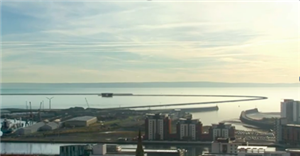
Plans for first full-scale tidal lagoon between Cardiff and Newport unveiled
Green energy news – by GreenWise staff
2nd March 2015
A tidal lagoon being planned between Cardiff and Newport will be powerful enough to produce green electricity for every home in Wales for the next 120 years, it was announced today.
Tidal Lagoon Power (TLP), the company behind the Swansea Bay tidal lagoon project, said the Cardiff to Newport tidal power plant will have an installed capacity of between 1,800 megawatts (MW) and 2,800 MW with an annual output of four terra watt hours (TWh) to 6 TWh. The project is one of a fleet of six tidal lagoons planned by TLP, including another four in Colwyn Bay, Bridgwater in Somerset and West Cumbria. Together they will deliver enough renewable energy to meet eight per cent of the UK’s total electricity requirement for the next century.
Environmental Impact Assessment
Tidal lagoons are man-made enclosures, similar in appearance to harbours or marinas. Breakwater walls impound a body of sea water and separate it from the natural ebb and flow of the tides. Once the difference between the water levels inside and outside the lagoon is sufficient, sluice gates open allowing water to rush through the gaps and turn great turbines in the process. But although based on proven technologies, none to date have been built.
“Full-scale tidal lagoon infrastructure gives the UK an opportunity to generate electricity from our amazing tidal range at a cost comparable to fossil fuel or nuclear generation. We have the best tidal resource in Europe and the second best worldwide. We now have a sustainable way to make the most of this natural advantage,” Mark Shorrock, chief executive of TLP said.
If built, Tidal Lagoon Cardiff could be operational by 2022. It will comprise of up to 90 turbines set within a 22 kilometre breakwater and able to generate power for approximately 14 hours a day. The project would be funded under the Government’s new Contracts for Difference renewable energy subsidy mechanism, which an estimated ‘strike price’ set at £90-£95 for each megawatt hour produced by the project, TLP said. The company expects to submit a full planning application for Tidal Lagoon Cardiff in 2017, with a decision then expected in 2018.
Environmental Impact Assessment
An Environmental Impact Assessment scoping report for Tidal Lagoon Cardiff will be submitted today, signalling the “starting gun” for the project, TLP said. It also confirmed that the Swansea Bay Tidal Lagoon, which is due to be completed in 2018 and is described as a “blueprint” for future tidal lagoons in the UK, will receive a planning decision by June 10 2015.
Tidal lagoons are man-made enclosures, similar in appearance to harbours or marinas. Breakwater walls impound a body of sea water and separate it from the natural ebb and flow of the tides. Once the difference between the water levels inside and outside the lagoon is sufficient, sluice gates open allowing water to rush through the gaps and turn great turbines in the process. But although based on proven technologies, none to date have been built.
Last year, a study undertaken by the Centre for Economic and Business Research, estimated a tidal lagoon infrastructure of the scale of the one planned by TLP could contribute as much as £27 billion over a 12 year period to the UK GDP. Another report, by Poyry, showed that tidal lagoons of the scale of the one proposed at Cardiff produce power at a cost comparable to nuclear and fossil fuel generation.
“Full-scale tidal lagoon infrastructure gives the UK an opportunity to generate electricity from our amazing tidal range at a cost comparable to fossil fuel or nuclear generation. We have the best tidal resource in Europe and the second best worldwide. We now have a sustainable way to make the most of this natural advantage,” Mark Shorrock, chief executive of TLP said.
If built, Tidal Lagoon Cardiff could be operational by 2022. It will comprise of up to 90 turbines set within a 22 kilometre breakwater and able to generate power for approximately 14 hours a day. The project would be funded under the Government’s new Contracts for Difference renewable energy subsidy mechanism, which an estimated ‘strike price’ set at £90-£95 for each megawatt hour produced by the project, TLP said. The company expects to submit a full planning application for Tidal Lagoon Cardiff in 2017, with a decision then expected in 2018.
Like this story? Please subscribe to our free weekly e-newsletter at the top of the page for more content like this.
Follow us on Twitter.
Related content: