WWF report issues “wake up call” to businesses over “alarming” biodiversity loss
Biodiversity news – by Thomas McMullan
29th September 2014
The World Wide Fund for Nature (WWF) has called on businesses, politicians and people to urgently solve humanity’s increasing demand on the planet’s natural resources, as it publishes today new findings obtained by the WWF and the Zoological Society of London that show wildlife populations globally have halved in the last 40 years.
Populations of mammals, birds, reptiles, amphibians and fish have fallen by an average of 52 per cent while freshwater species populations have suffered a 76 per cent decline, an average loss almost double that of land and marine species, according to WWF‘s ‘Living Planet Report 2014‘.
Living Planet Index
Living Planet Index
The report, which is being published ahead of a world leaders’ meeting in Paris next year to agree a global deal on climate change, describes a shocking drop in biodiversity against a rising carbon and ecological footprint caused by unsustainable human consumption. Biodiversity loss, such as through deforestation, over-fishing and carbon emissions, is measured using the ‘Living Planet Index’; a database maintained by the Zoological Society of London which tracks over 10,000 vertebrate species populations from 1970 to 2010.
“The scale of the destruction highlighted in this report should be a wake-up call for us all,” said David Nussbaum, chief executive of WWF-UK. “Next year – when countries of the world are due to come together to agree on a new global climate agreement, as well as a set of sustainable development goals – presents us with a unique opportunity to reverse the trends we see in the Living Planet Report. We all – politicians, businesses and people – have an interest, and a responsibility, to act to ensure we protect what we all value: a healthy future for both people and nature.”
“The scale of the destruction highlighted in this report should be a wake-up call for us all,” said David Nussbaum, chief executive of WWF-UK. “Next year – when countries of the world are due to come together to agree on a new global climate agreement, as well as a set of sustainable development goals – presents us with a unique opportunity to reverse the trends we see in the Living Planet Report. We all – politicians, businesses and people – have an interest, and a responsibility, to act to ensure we protect what we all value: a healthy future for both people and nature.”
While the Forest elephant has seen its population restricted to a mere six to seven per cent of their historic range, the global ecological footprint; the area required to supply the ecological services used, increased from 7.6 billion global hectares (gha) in 1961 to 18.1 billion gha in 2010. The land actually available to provide these services in 2010 is only 12 billion gha. This means that not only is humanity’s ecological demand rapidly destroying natural habitats but that humanity’s demand on nature has exceeded what the planet can replenish.
“The scale of biodiversity loss and damage to the very ecosystems that are essential to our existence is alarming,” said Professor Ken Norris, director of Science at the Zoological Society of London. “This damage is not inevitable but a consequence of the way we choose to live. Although the report shows the situation is critical, there is still hope. Protecting nature needs focused conservation action, political will and support from businesses.”
Sharing natural resources
“The scale of biodiversity loss and damage to the very ecosystems that are essential to our existence is alarming,” said Professor Ken Norris, director of Science at the Zoological Society of London. “This damage is not inevitable but a consequence of the way we choose to live. Although the report shows the situation is critical, there is still hope. Protecting nature needs focused conservation action, political will and support from businesses.”
Sharing natural resources
In addition to bleak statistics about the loss of wildlife, the report presses forward for better ways of managing, using and sharing natural resources within the planet’s limitations. These range from reducing industrial waste to scaling up renewable energy production. Coming days after the UN Climate Summit in New York, the report presses the importance of enacting definite measures at next year’s UN climate change conference in Paris.
“Ambitious and focused negotiations over an international climate deal to be agreed in Paris next year are a clear opportunity to control, and hopefully reverse, the trends highlighted in the Living Planet Report,” said Nussbaum. “Concluding a global agreement that sets countries on course to build low carbon economies is essential, and our reliance on fossil fuels is currently the dominant factor in driving dangerous climate change.”
Species under threat
“Ambitious and focused negotiations over an international climate deal to be agreed in Paris next year are a clear opportunity to control, and hopefully reverse, the trends highlighted in the Living Planet Report,” said Nussbaum. “Concluding a global agreement that sets countries on course to build low carbon economies is essential, and our reliance on fossil fuels is currently the dominant factor in driving dangerous climate change.”
Species under threat
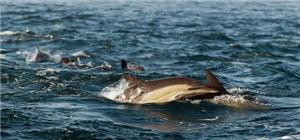
Among the species which have seen a drastic drop in population is the tiger, which has fallen from around 100,000 in 1910 to as few as 3200 in 2010, and the short-beaked common dolphin which between 1996 and 2007 declined in the Ionian sea from 150 to 15 individuals.
In 2015 in Paris, world leaders will agree two potentially critical global agreements: the post-2015 development framework – which will include Sustainable Development Goals to be achieved by all countries by 2030; and the UN Framework Convention on Climate Change.
In 2015 in Paris, world leaders will agree two potentially critical global agreements: the post-2015 development framework – which will include Sustainable Development Goals to be achieved by all countries by 2030; and the UN Framework Convention on Climate Change.
Like this story? Please subscribe to our free weekly e-newsletter at the top of the page for more content like this.
Follow us on Twitter.
Related content: