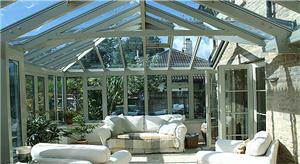
Orangeries vs. conservatories: which is best for your eco home project?
26th November 2015
Orangeries were first introduced during the Italian Renaissance: citrus trees and fragile plants were put under arcades closed off with glass windows to protect them from colder temperatures. Roof height was originally considerably high as orangeries were intended to provide shelter for very large trees.
In England, conservatories started to be used as an extra building in posh house grounds from the 15th century onwards. They became more popular later in the 17th century with a boom in the 19th century Victorian era as an additional room attached directly to the house, and introducing a sloped roof to get more light in and smaller glass walls.
One of the main differences between these two buildings that is still relevant today in the context of an eco home project is the amount of glazing used.
In fact, the building frame of a conservatory is likely to be glazed, with a lighter timber frame. The building frame of an orangery however is much more robust, with a solid brick base and relying heavily on timber in its walls.
The roof is also an important element which sets the two of them apart. The most distinguishable trait for orangeries is the lantern roof, a very popular option for homeowners especially when the room is used an additional living space, for a very luminous kitchen for instance. In conservatories, the roof is often covered with tiles and follows the same shape as the typical house roof.
Architectural features aside, the most important factor if you’re planning on adding an extra room to your home, is the heat retention potential for both option.
An orangery being a more solid, direct extension of the house, it will typically retain the heat more efficiently than an ordinary conservatory. While it might be a little more expensive at first, an orangery will also be much easier to warm up as its walls are better for heat retention. It would be ill-advised to try and heat a conservatory in the winter months as putting a radiator in is a sure way to inflate your electricity bill majorly.
Conservatories can even become an issue if the heat loss isn’t managed properly in the first place. Solutions exist though in order to build a more energy efficient conservatory and you would have to focus on using quality materials and spend a little more too.
If you would rather opt for a conservatory instead of an orangery in spite of the heat loss issues in the colder months, an energy-efficient roof panel can help lower your energy bills by regulating the temperatures all year round more efficiently.
Ultimately, it will be up to you to decide which is the most ecological solution for your home: a comfortable and durable orangery or a cheaper, lighter and energy-efficient conservatory.
One of the main differences between these two buildings that is still relevant today in the context of an eco home project is the amount of glazing used.
In fact, the building frame of a conservatory is likely to be glazed, with a lighter timber frame. The building frame of an orangery however is much more robust, with a solid brick base and relying heavily on timber in its walls.
The roof is also an important element which sets the two of them apart. The most distinguishable trait for orangeries is the lantern roof, a very popular option for homeowners especially when the room is used an additional living space, for a very luminous kitchen for instance. In conservatories, the roof is often covered with tiles and follows the same shape as the typical house roof.
Architectural features aside, the most important factor if you’re planning on adding an extra room to your home, is the heat retention potential for both option.
An orangery being a more solid, direct extension of the house, it will typically retain the heat more efficiently than an ordinary conservatory. While it might be a little more expensive at first, an orangery will also be much easier to warm up as its walls are better for heat retention. It would be ill-advised to try and heat a conservatory in the winter months as putting a radiator in is a sure way to inflate your electricity bill majorly.
Conservatories can even become an issue if the heat loss isn’t managed properly in the first place. Solutions exist though in order to build a more energy efficient conservatory and you would have to focus on using quality materials and spend a little more too.
If you would rather opt for a conservatory instead of an orangery in spite of the heat loss issues in the colder months, an energy-efficient roof panel can help lower your energy bills by regulating the temperatures all year round more efficiently.
Ultimately, it will be up to you to decide which is the most ecological solution for your home: a comfortable and durable orangery or a cheaper, lighter and energy-efficient conservatory.